
Search
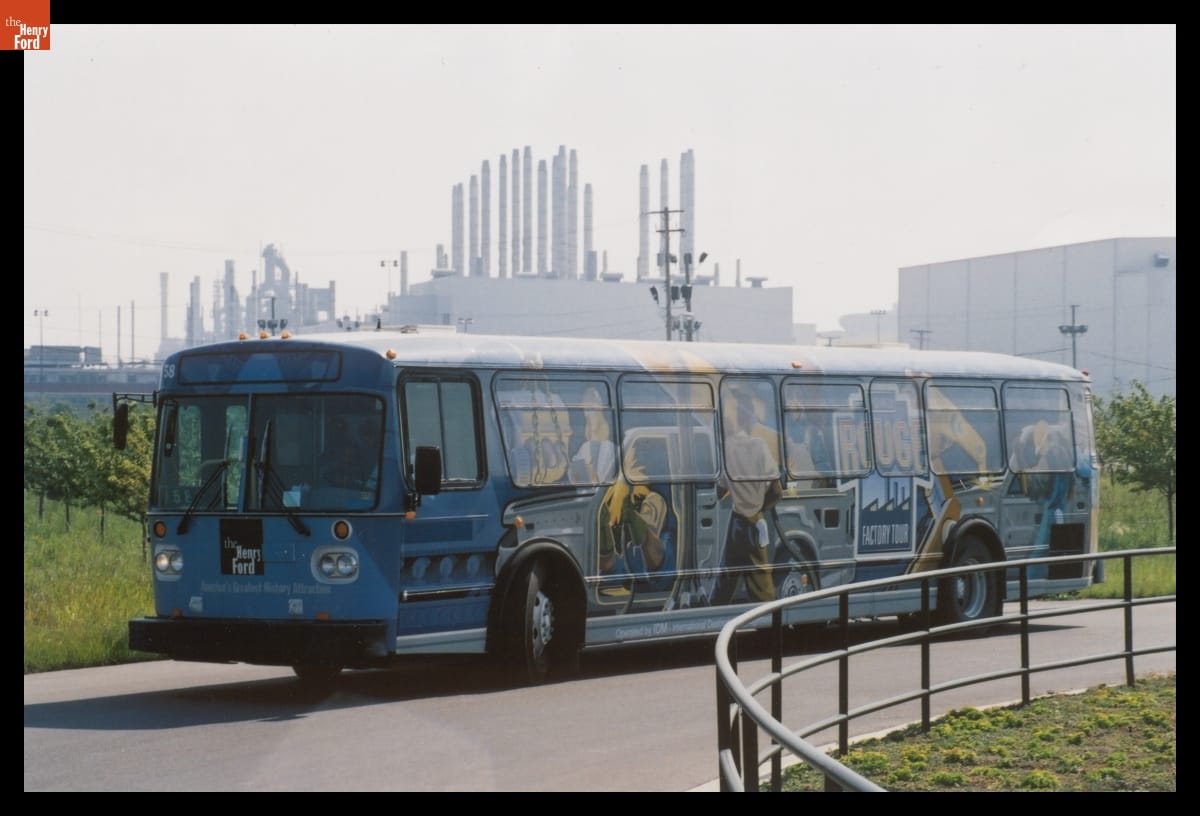
- Bus Arriving at Ford Rouge Factory Tour, 2004 - The Ford Rouge Factory Tour opened to the public in May 2004. The experience began with a bus ride from The Henry Ford's Dearborn, Michigan, campus, and continued at Ford Motor Company's nearby Rouge complex. Visitors explored the Rouge's history, viewed the factory complex from an observation deck, and watched final assembly of Ford F-150 pickup trucks.
- September 15, 2004
- Collections - Artifact
Bus Arriving at Ford Rouge Factory Tour, 2004
The Ford Rouge Factory Tour opened to the public in May 2004. The experience began with a bus ride from The Henry Ford's Dearborn, Michigan, campus, and continued at Ford Motor Company's nearby Rouge complex. Visitors explored the Rouge's history, viewed the factory complex from an observation deck, and watched final assembly of Ford F-150 pickup trucks.
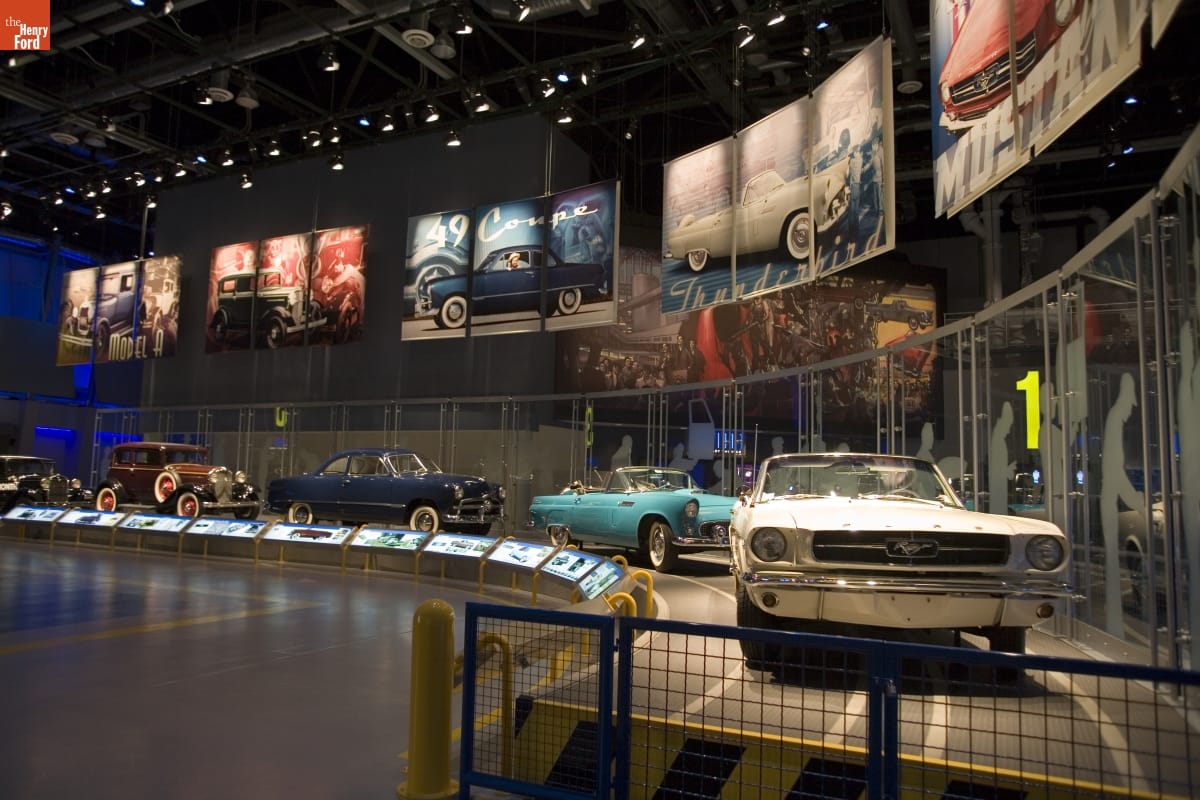
- Legacy Gallery at Ford Rouge Factory Tour Visitor Center, January 2006 - The Ford Rouge Factory Tour opened in 2004. Visitors explored the Rouge's history, viewed the complex from an observation deck, and watched final assembly of Ford F-150 pickup trucks. The Legacy Gallery exhibited five important Ford models built at the Rouge: a 1929 Model A, a 1932 V-8, a 1949 Club Coupe, a 1956 Thunderbird, and a 1965 Mustang.
- January 01, 2006
- Collections - Artifact
Legacy Gallery at Ford Rouge Factory Tour Visitor Center, January 2006
The Ford Rouge Factory Tour opened in 2004. Visitors explored the Rouge's history, viewed the complex from an observation deck, and watched final assembly of Ford F-150 pickup trucks. The Legacy Gallery exhibited five important Ford models built at the Rouge: a 1929 Model A, a 1932 V-8, a 1949 Club Coupe, a 1956 Thunderbird, and a 1965 Mustang.
- Ford Rouge Factory Tour: History & Timeline - Henry Ford envisioned the Rouge as a nonstop system from raw materials to finished vehicles — a vision that ultimately produced 4,000 cars a day.

- January 01, 2016
- Collections - popular research topic
Ford Rouge Factory Tour: History & Timeline
Henry Ford envisioned the Rouge as a nonstop system from raw materials to finished vehicles — a vision that ultimately produced 4,000 cars a day.
- Just Added to Our Digital Collections: Ford Rouge Factory Tour Vehicles - We've just digitized the cars you’ll see in the Legacy Gallery during your Ford Rouge Factory Tour.

- November 25, 2014
- Collections - article
Just Added to Our Digital Collections: Ford Rouge Factory Tour Vehicles
We've just digitized the cars you’ll see in the Legacy Gallery during your Ford Rouge Factory Tour.
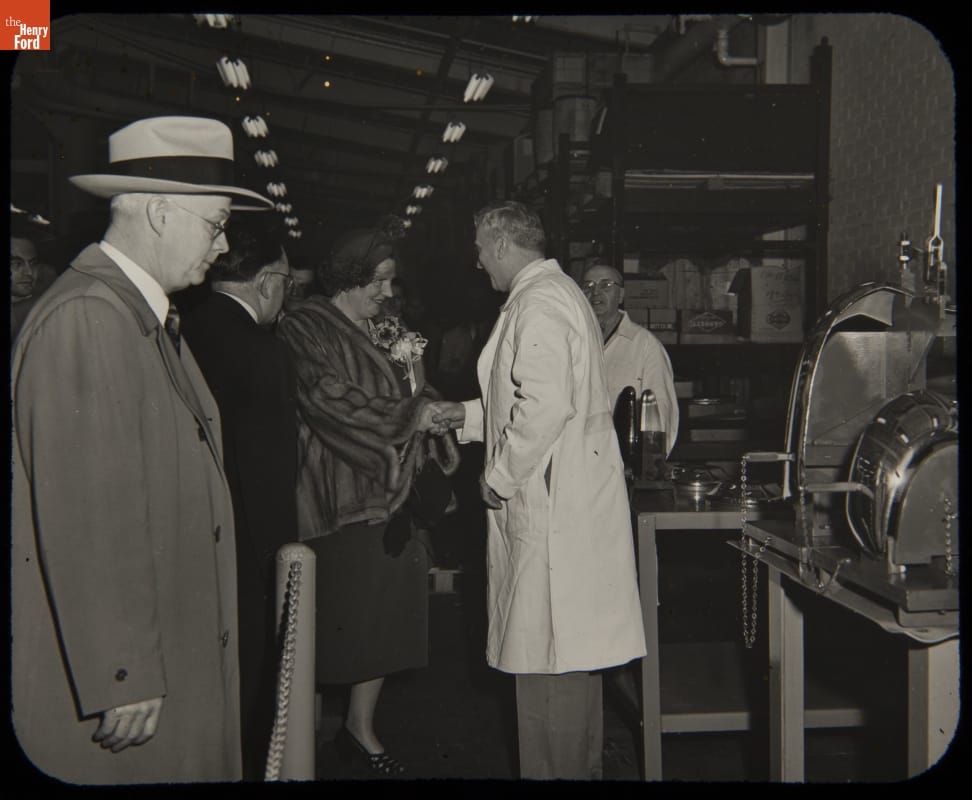
- Queen Juliana Greeting Worker While Touring the Ford Rouge Plant, April 15, 1952 -
- April 15, 1952
- Collections - Artifact
Queen Juliana Greeting Worker While Touring the Ford Rouge Plant, April 15, 1952
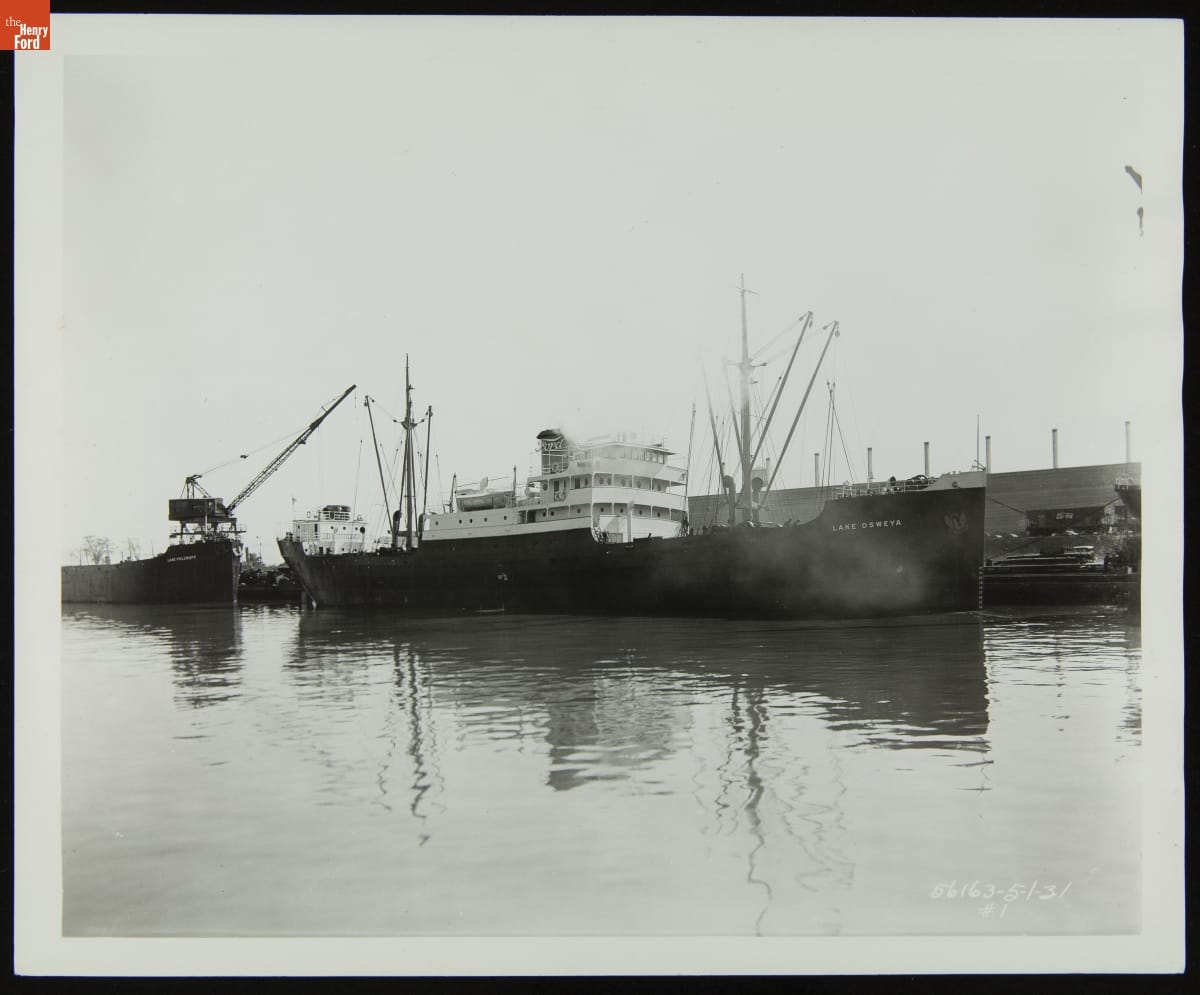
- Ford Freighter "Lake Osweya" Docked at Rouge River Factory, Dearborn, Michigan, May 1, 1931 - Henry Ford purchased 199 surplus World War I merchant ships from the United States government in 1925. Most of these ships were scrapped. But a few, like the <em>Lake Osweya</em>, were refitted into ocean-going freighters that transported automobiles, parts, and supplies to Ford plants located in cities along the American seaboard.
- May 01, 1931
- Collections - Artifact
Ford Freighter "Lake Osweya" Docked at Rouge River Factory, Dearborn, Michigan, May 1, 1931
Henry Ford purchased 199 surplus World War I merchant ships from the United States government in 1925. Most of these ships were scrapped. But a few, like the Lake Osweya, were refitted into ocean-going freighters that transported automobiles, parts, and supplies to Ford plants located in cities along the American seaboard.
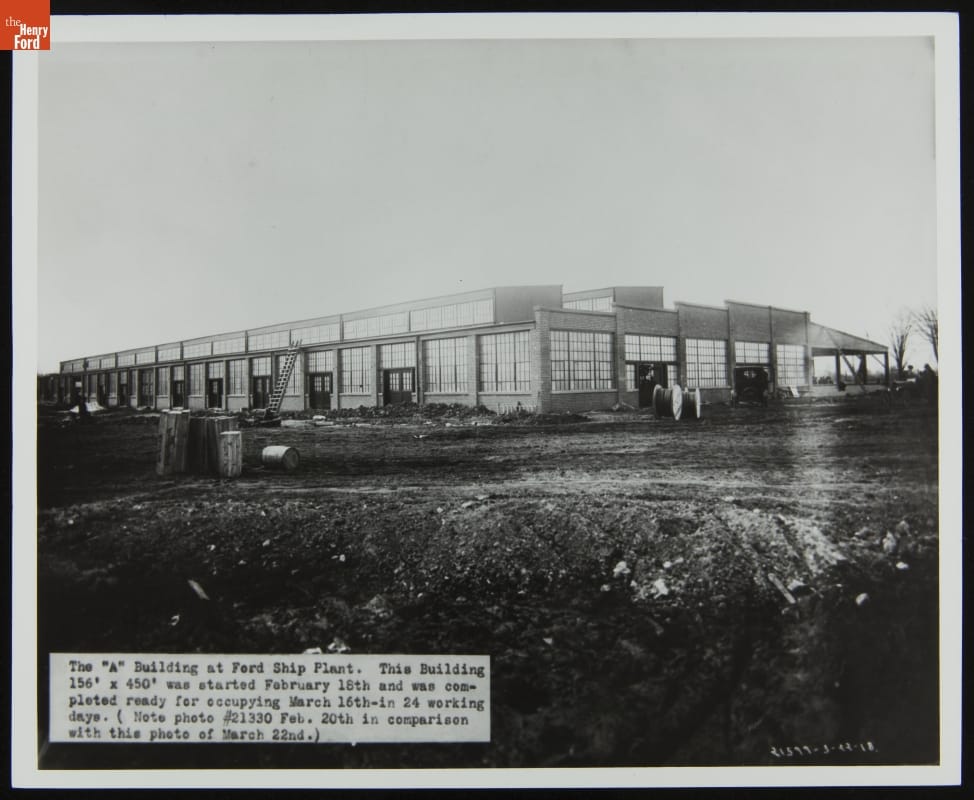
- Ford Rouge Plant "A" Building, First Structure of the Eagle Boat Factory, March 1918 - Ford Motor Company built Eagle anti-submarine boats for the U.S. Navy during World War I. Ford assembled the boats, using mass production techniques, at a new plant near the mouth of the Rouge River. The factory consisted of three primary buildings. The "A" Building was where steel sheets were cut to size and punched in preparation for riveting.
- March 22, 1918
- Collections - Artifact
Ford Rouge Plant "A" Building, First Structure of the Eagle Boat Factory, March 1918
Ford Motor Company built Eagle anti-submarine boats for the U.S. Navy during World War I. Ford assembled the boats, using mass production techniques, at a new plant near the mouth of the Rouge River. The factory consisted of three primary buildings. The "A" Building was where steel sheets were cut to size and punched in preparation for riveting.
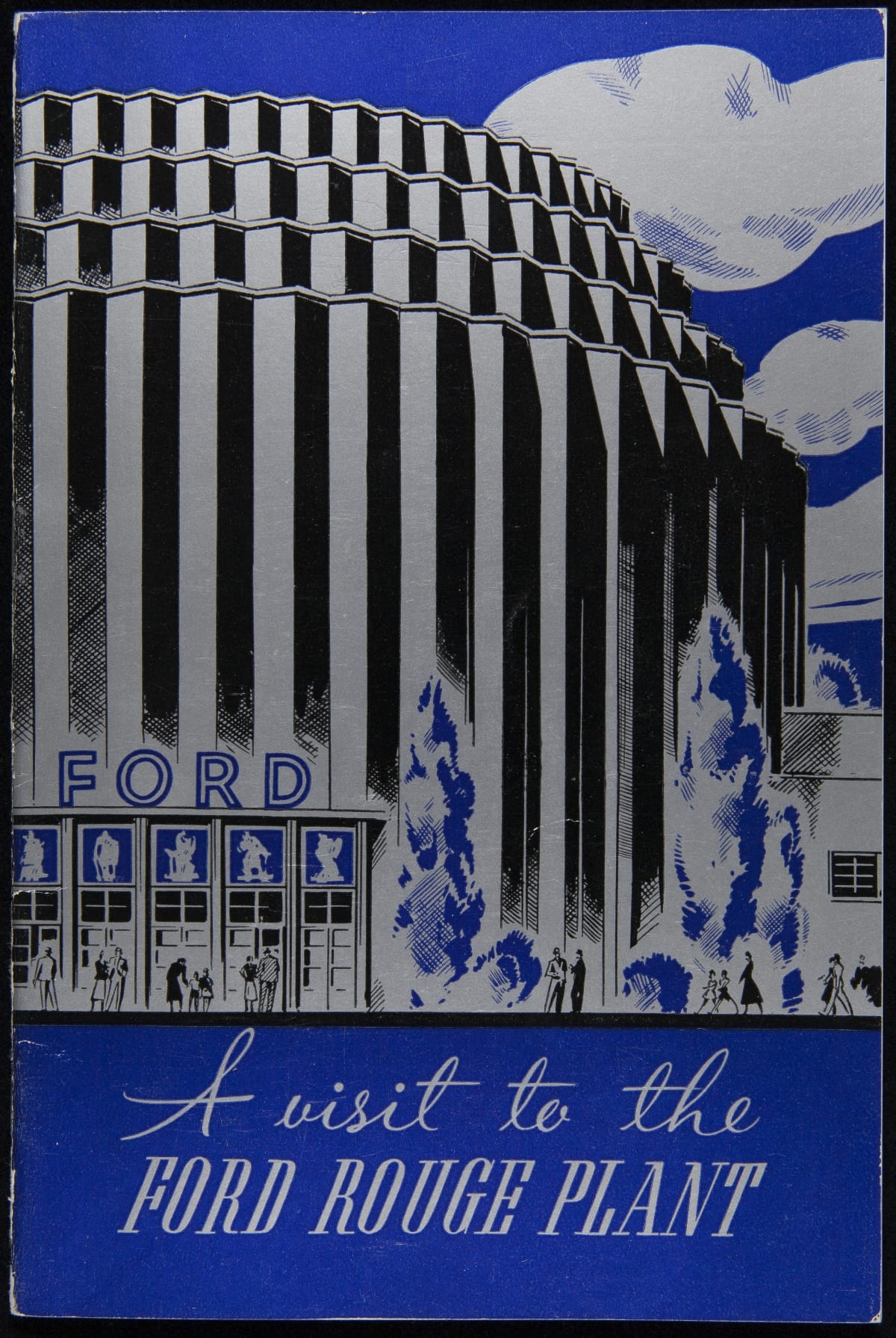
- Souvenir Brochure, "A Visit to the Ford Rouge Plant," April 1937 - Ford Motor Company offered the first public tours of its Rouge plant in 1924. The popular tours stoked the fascination surrounding Henry Ford and his massive factory. Visitors gathered in the Ford Rotunda, where they viewed displays on the automaker's operations, and then boarded a glass-roofed bus for a trip through the 1,300-acre complex.
- April 01, 1937
- Collections - Artifact
Souvenir Brochure, "A Visit to the Ford Rouge Plant," April 1937
Ford Motor Company offered the first public tours of its Rouge plant in 1924. The popular tours stoked the fascination surrounding Henry Ford and his massive factory. Visitors gathered in the Ford Rotunda, where they viewed displays on the automaker's operations, and then boarded a glass-roofed bus for a trip through the 1,300-acre complex.
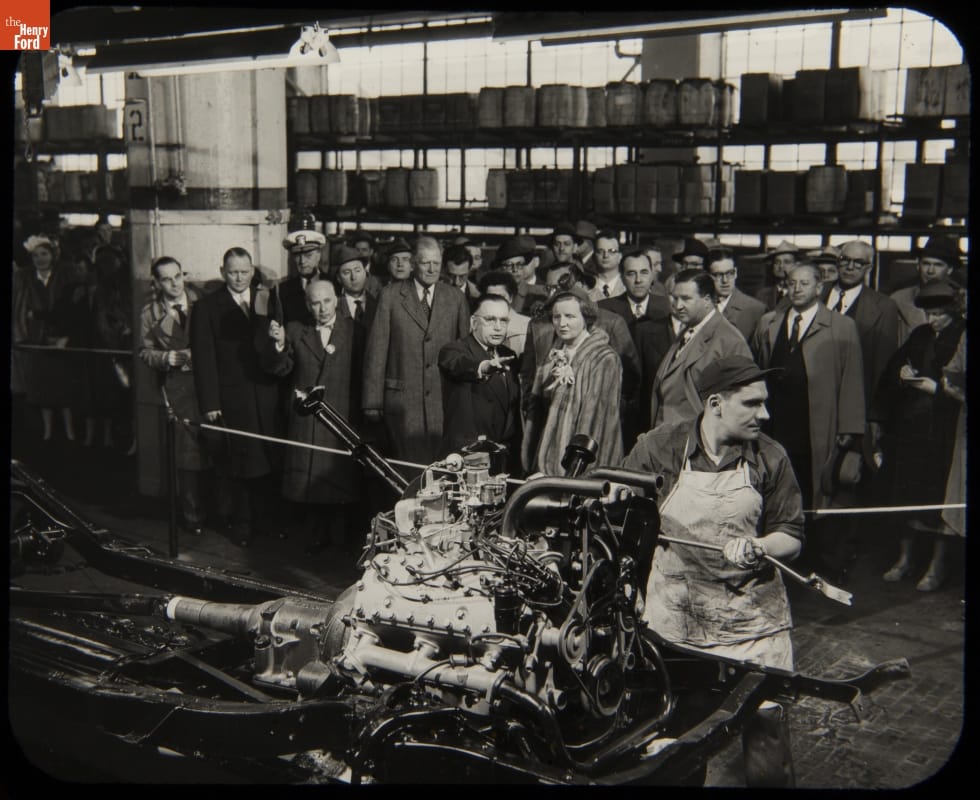
- Henry Ford II and Queen Juliana Touring the Ford Rouge Plant Assembly Lines, April 15, 1952 -
- April 15, 1952
- Collections - Artifact
Henry Ford II and Queen Juliana Touring the Ford Rouge Plant Assembly Lines, April 15, 1952
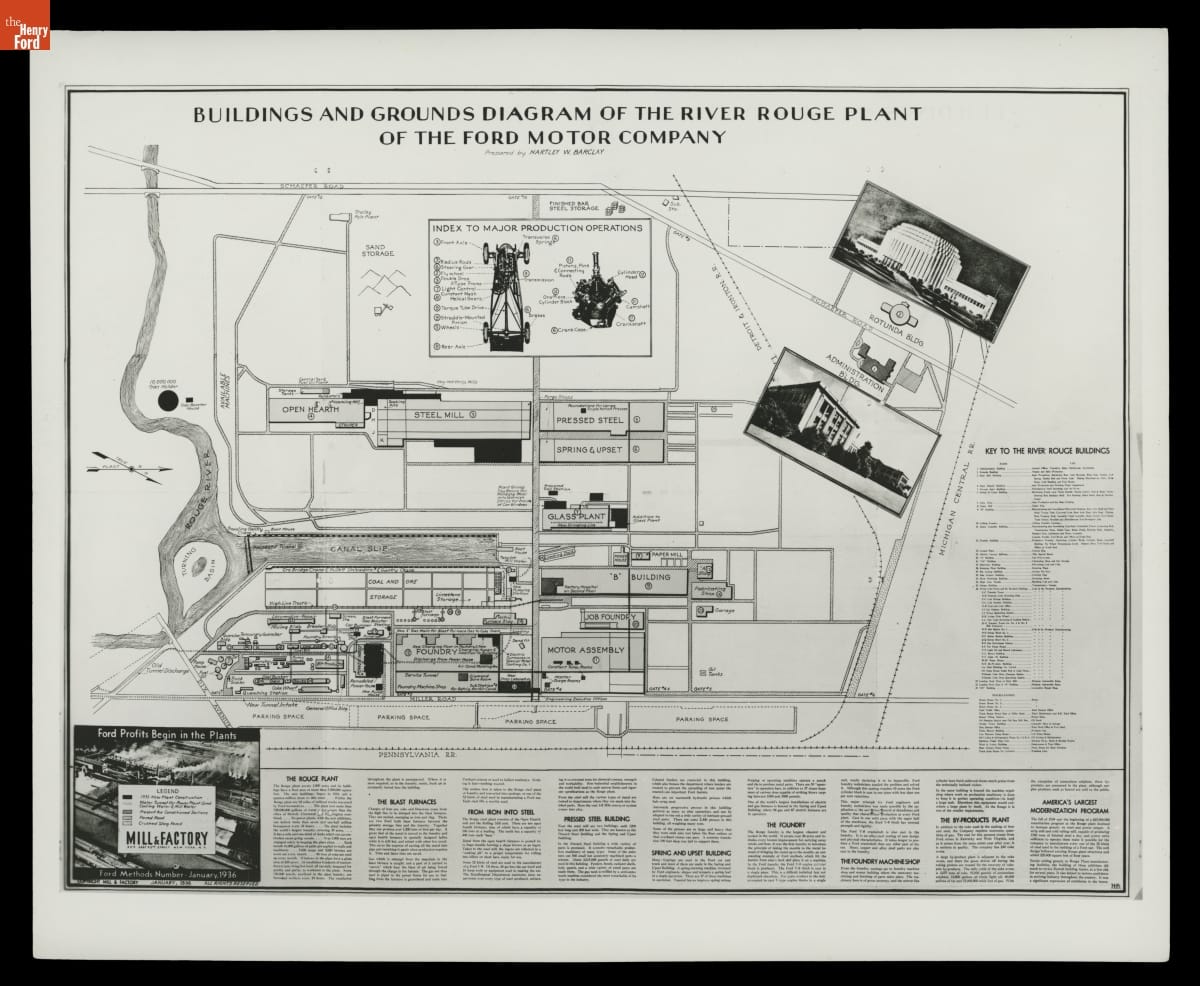
- Buildings and Grounds Diagram of the River Rouge Plant of the Ford Motor Company, Mill & Factory, 1936 - Henry Ford's vision for the River Rouge Plant was self-sufficiency. This map illustrates the Rouge's grounds and facilities. It also provides descriptions of some daily operations in this massive complex -- from the 5,000 men whose sole responsibility was cleaning buildings to the by-product plant workers who recovered tar, gas, and crude oil from the coking process for plant consumption.
- circa 1935
- Collections - Artifact
Buildings and Grounds Diagram of the River Rouge Plant of the Ford Motor Company, Mill & Factory, 1936
Henry Ford's vision for the River Rouge Plant was self-sufficiency. This map illustrates the Rouge's grounds and facilities. It also provides descriptions of some daily operations in this massive complex -- from the 5,000 men whose sole responsibility was cleaning buildings to the by-product plant workers who recovered tar, gas, and crude oil from the coking process for plant consumption.