
Search
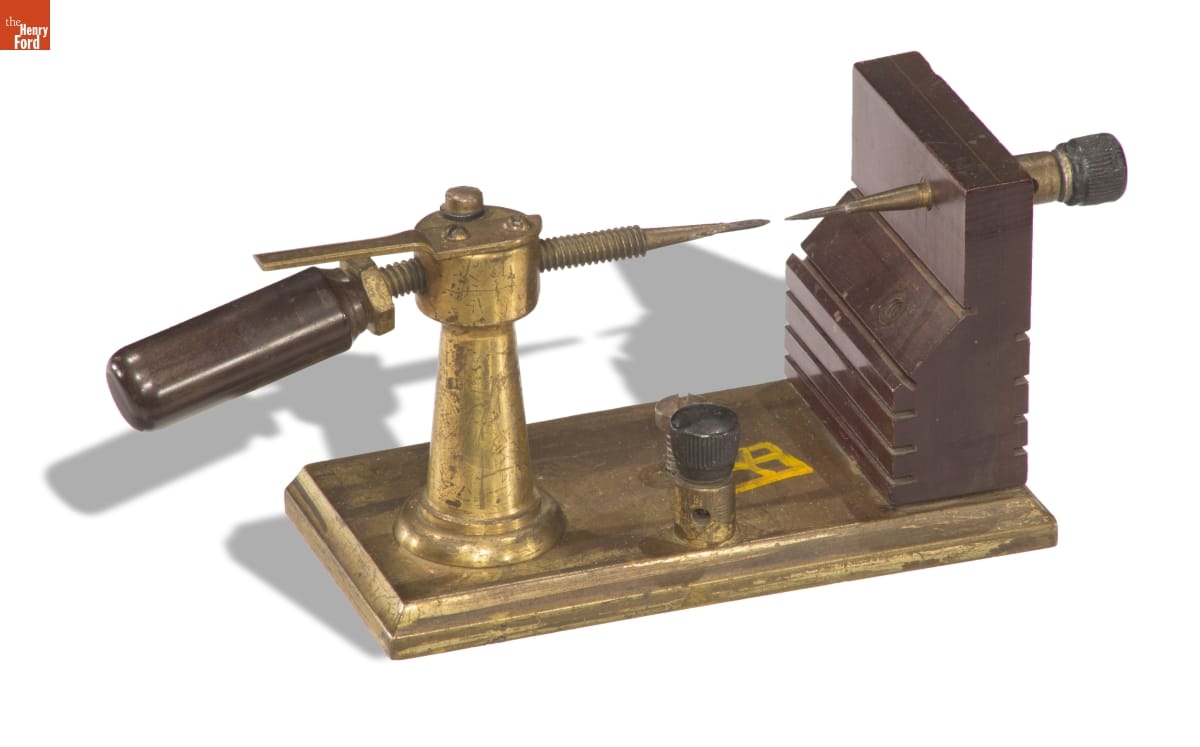
- Spark Gap Transmitter, 1910-1925 - Spark gap transmitters were the first means of practical radio transmission for the first thirty years of radio development. By the end of WWI, vacuum tube technology advanced sufficiently, replacing the spark gap. Even though the vacuum tube ensured more efficient and reliable transmissions, commercial use of spark gap transmitters continued up until WWII as back-up transmitters.
- 1910-1925
- Collections - Artifact
Spark Gap Transmitter, 1910-1925
Spark gap transmitters were the first means of practical radio transmission for the first thirty years of radio development. By the end of WWI, vacuum tube technology advanced sufficiently, replacing the spark gap. Even though the vacuum tube ensured more efficient and reliable transmissions, commercial use of spark gap transmitters continued up until WWII as back-up transmitters.
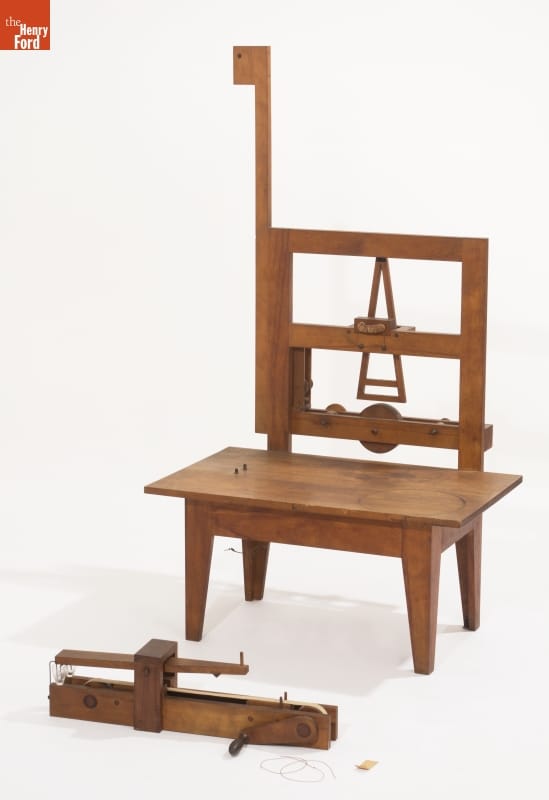
- Replica of First Morse Port Rule Telegraph -
- 1837
- Collections - Artifact
Replica of First Morse Port Rule Telegraph
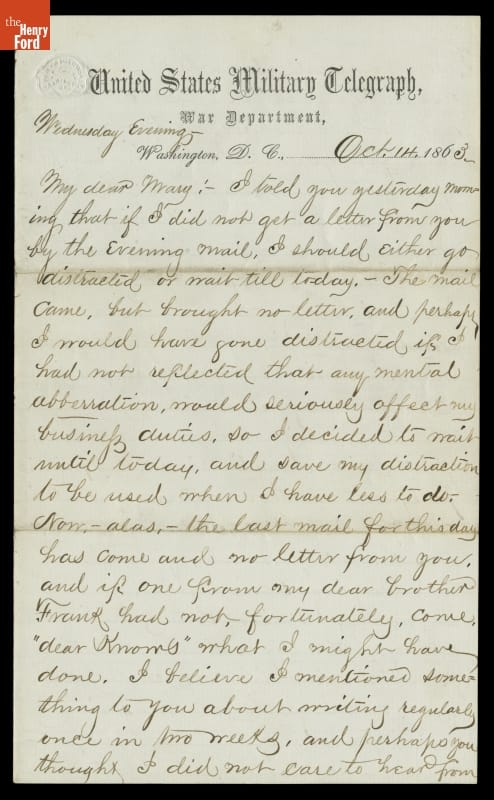
- Letter from Albert B. Chandler to Marilla Stedman, October 14, 1863 - Albert B. Chandler served as a cipher operator at the War Department office in Washington, D.C., during the Civil War. He transmitted coded messages to and decoded messages from Union military field commanders. While at this post, he became acquainted with President Abraham Lincoln. Chandler describes some of his wartime experiences in this letter to Marilla Stedman, his future bride.
- October 14, 1863
- Collections - Artifact
Letter from Albert B. Chandler to Marilla Stedman, October 14, 1863
Albert B. Chandler served as a cipher operator at the War Department office in Washington, D.C., during the Civil War. He transmitted coded messages to and decoded messages from Union military field commanders. While at this post, he became acquainted with President Abraham Lincoln. Chandler describes some of his wartime experiences in this letter to Marilla Stedman, his future bride.
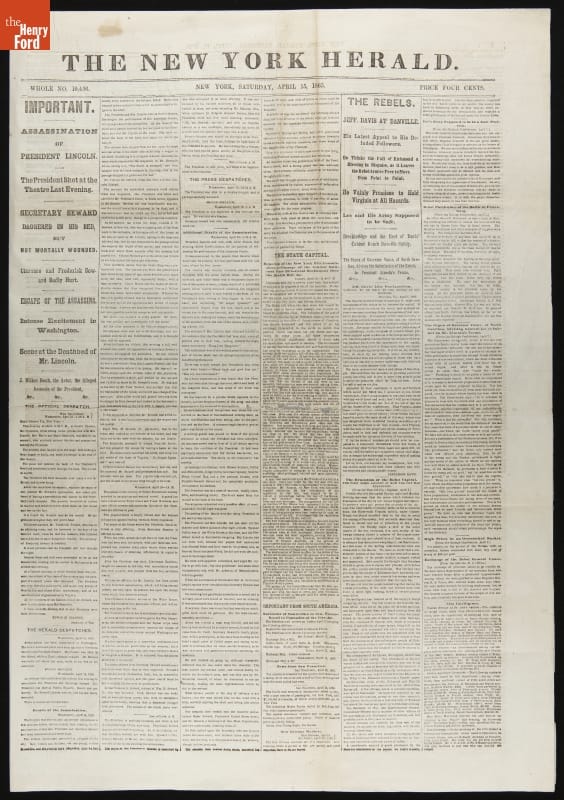
- New York Herald Newspaper for April 15, 1865 - This April 15, 1865, issue of the <em>New York Herald</em> reported the developing news surrounding President Abraham Lincoln's death. Published on the date of the President's death, it had the latest news via telegraph dispatches from their reporters and from U.S. Secretary of War, Edwin M. Stanton. The editors made space on the front page for this shocking news, replacing what they had already prepared that day.
- April 15, 1865
- Collections - Artifact
New York Herald Newspaper for April 15, 1865
This April 15, 1865, issue of the New York Herald reported the developing news surrounding President Abraham Lincoln's death. Published on the date of the President's death, it had the latest news via telegraph dispatches from their reporters and from U.S. Secretary of War, Edwin M. Stanton. The editors made space on the front page for this shocking news, replacing what they had already prepared that day.
- Chester Telegraph Relay, 1850-1860 -
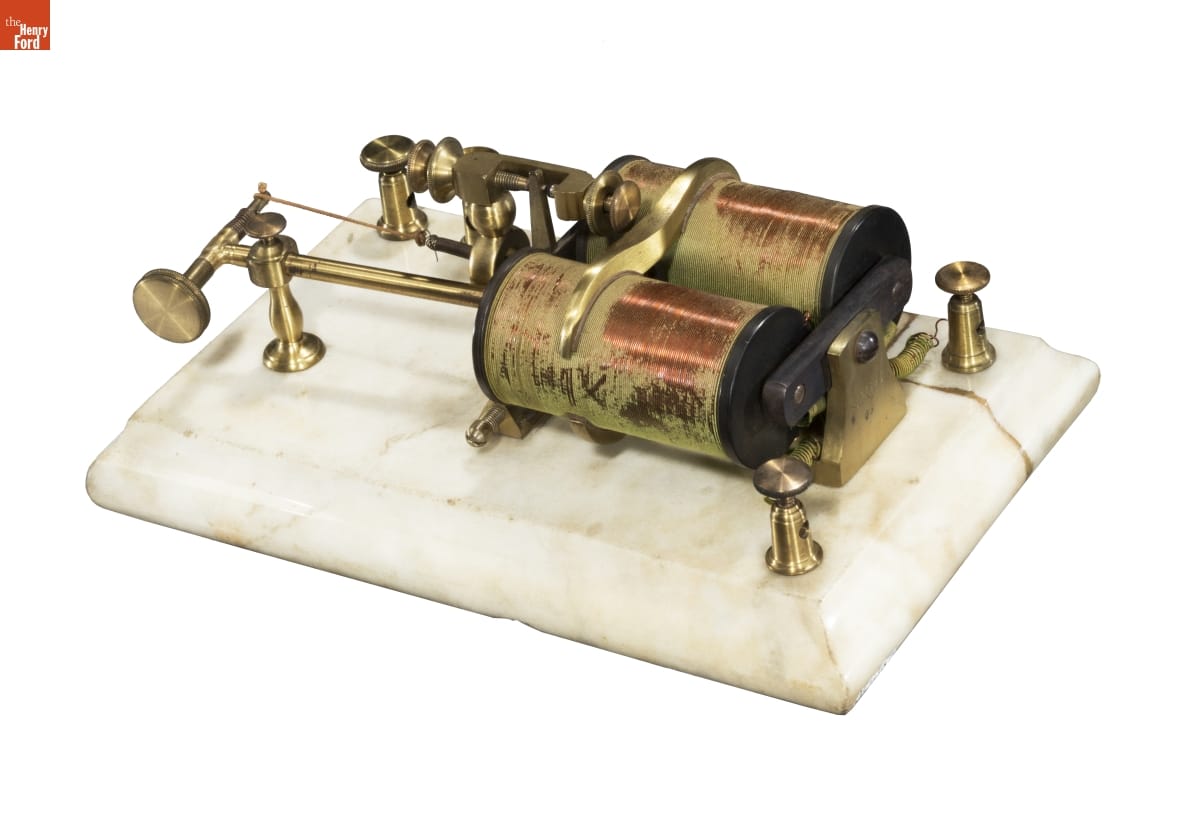
- 1850-1860
- Collections - Artifact
Chester Telegraph Relay, 1850-1860
- Insulator, Used by U. S. Merchant Marines, 1915 -
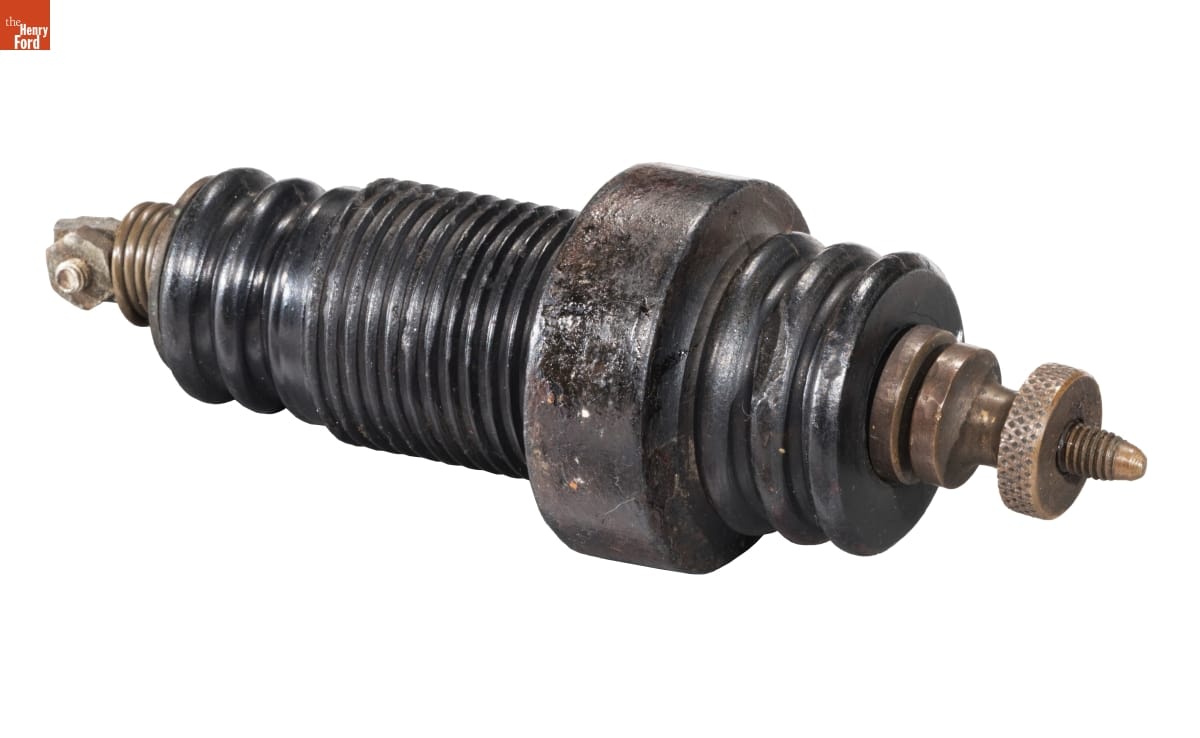
- 1915
- Collections - Artifact
Insulator, Used by U. S. Merchant Marines, 1915
- J. H. Bunnell Wheatstone Relay, Model 1A, 1890-1900 -
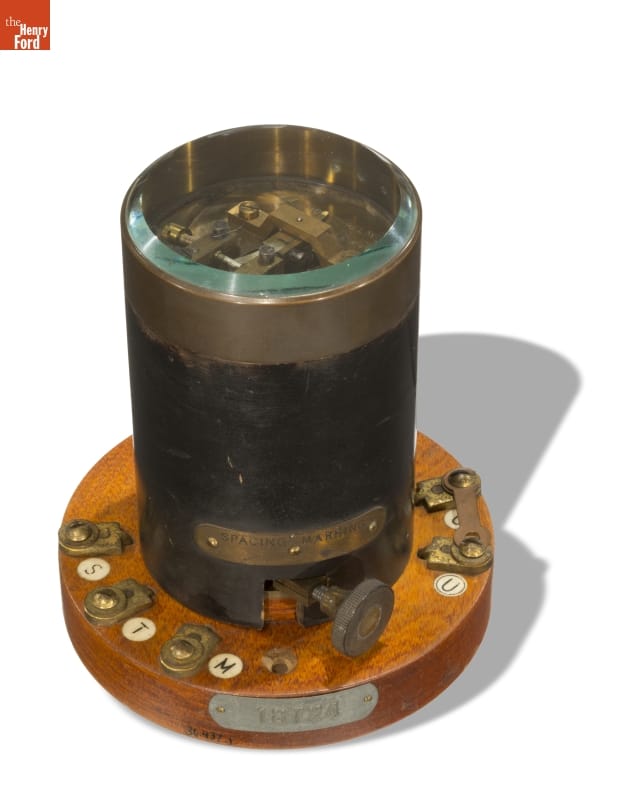
- 1890-1900
- Collections - Artifact
J. H. Bunnell Wheatstone Relay, Model 1A, 1890-1900
- Bell Alarm Used with Massie Radio Receiver, 1903-1912 -
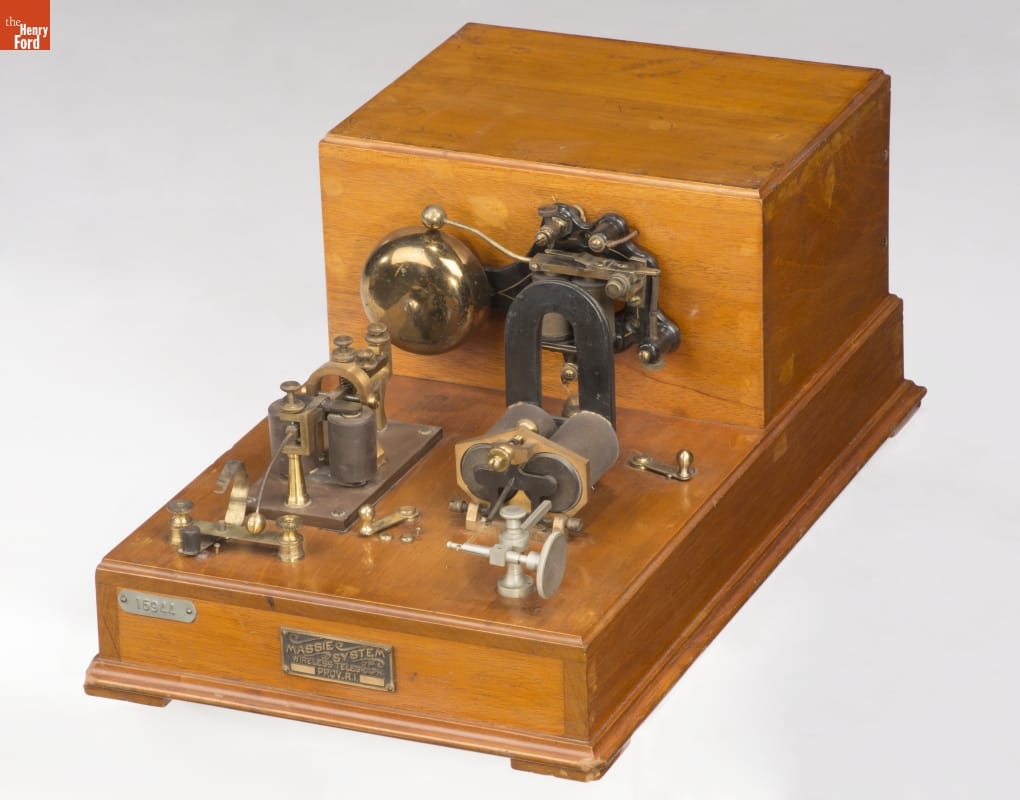
- 1903-1912
- Collections - Artifact
Bell Alarm Used with Massie Radio Receiver, 1903-1912
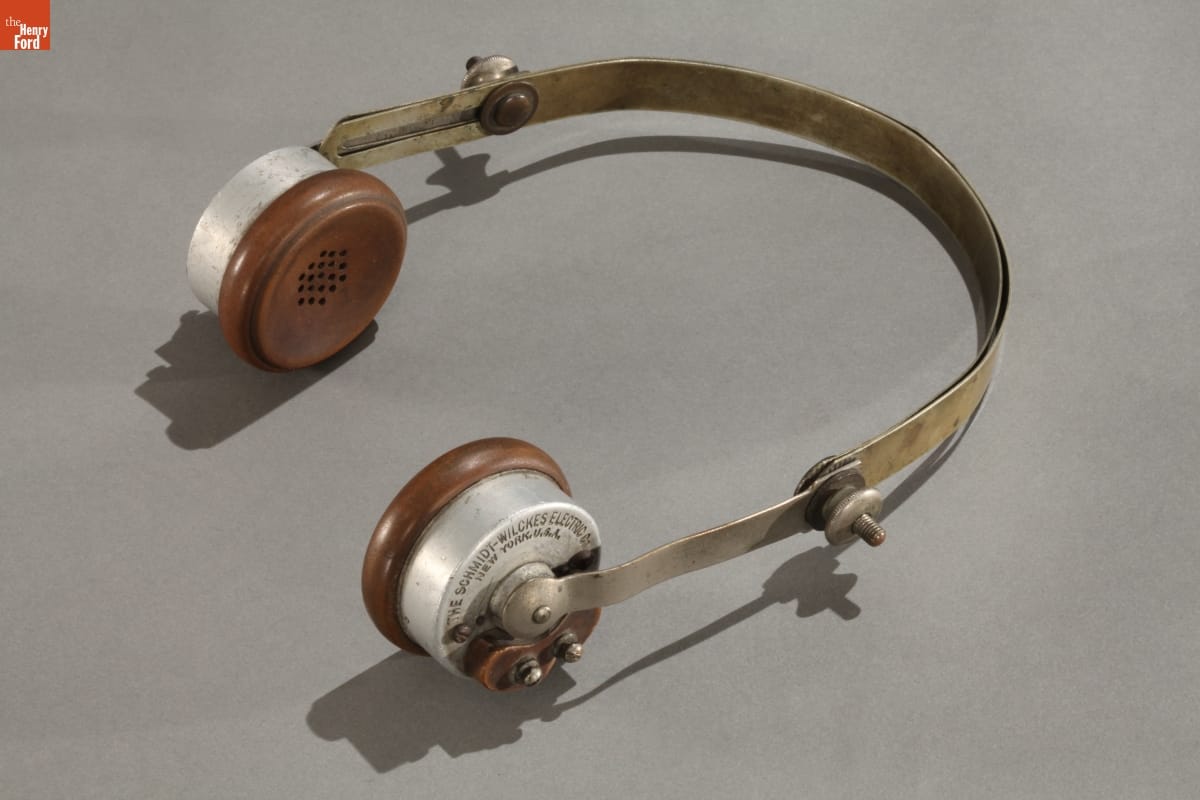
- Radio Headphones Used by Theodore Haubner While Transmitting the First "SOS" Distress Signal, August 11, 1909 - In 1909, telegraph operator Theodore Haubner sent the first American ship-to-shore wireless distress signal -- SOS. These headphones were part of his wireless equipment. Haubner was aboard the SS <EM>Arapahoe</EM> off Cape Hatteras, North Carolina, when it became disabled.
- August 11, 1909
- Collections - Artifact
Radio Headphones Used by Theodore Haubner While Transmitting the First "SOS" Distress Signal, August 11, 1909
In 1909, telegraph operator Theodore Haubner sent the first American ship-to-shore wireless distress signal -- SOS. These headphones were part of his wireless equipment. Haubner was aboard the SS Arapahoe off Cape Hatteras, North Carolina, when it became disabled.
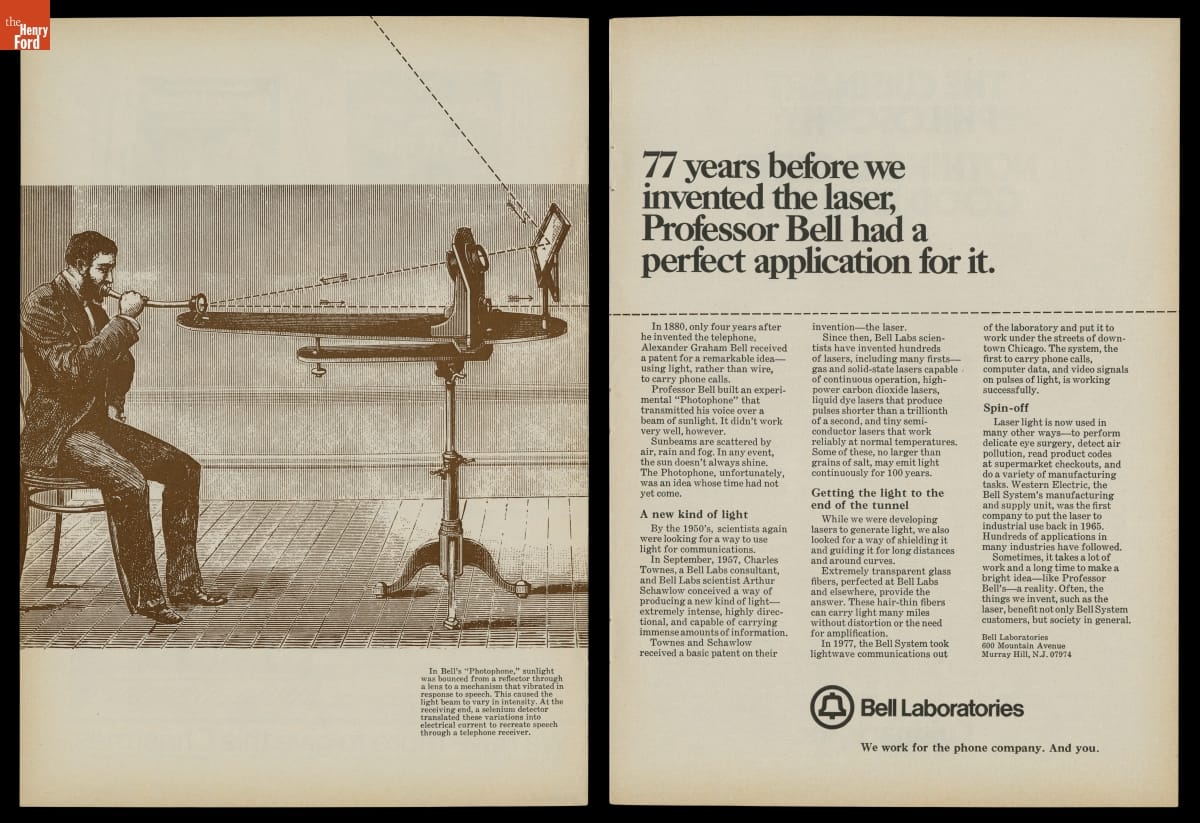
- "77 Years Before We Invented the Laser Professor Bell Had a Perfect Application for It," Bell Labs Advertisement, 1978 -
- December 04, 1978
- Collections - Artifact
"77 Years Before We Invented the Laser Professor Bell Had a Perfect Application for It," Bell Labs Advertisement, 1978